Upload receipts, tracking screenshots, seller emails, and your card statement. Get a dispute letter, dated timeline, and numbered evidence index in one PDF you review before sending.
Use copies, not bank logins. You review the packet yourself before sending.
What you get back
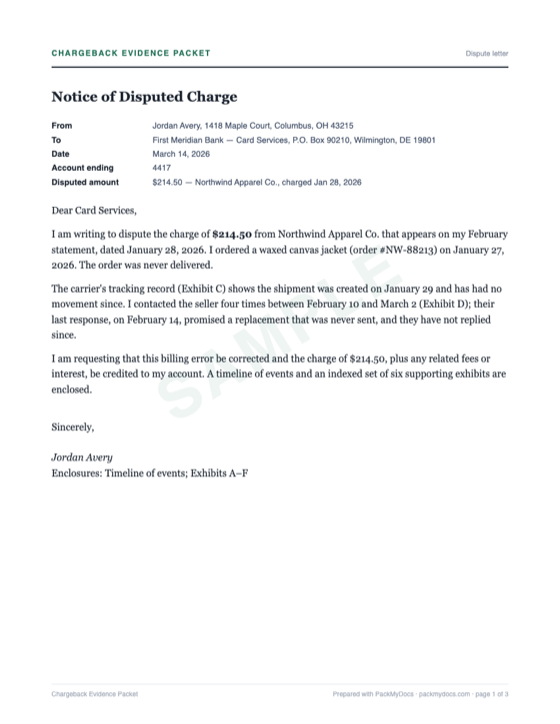
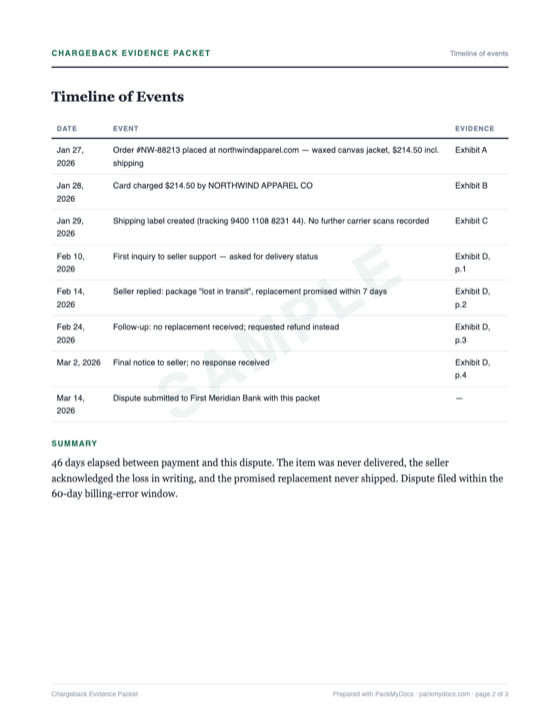
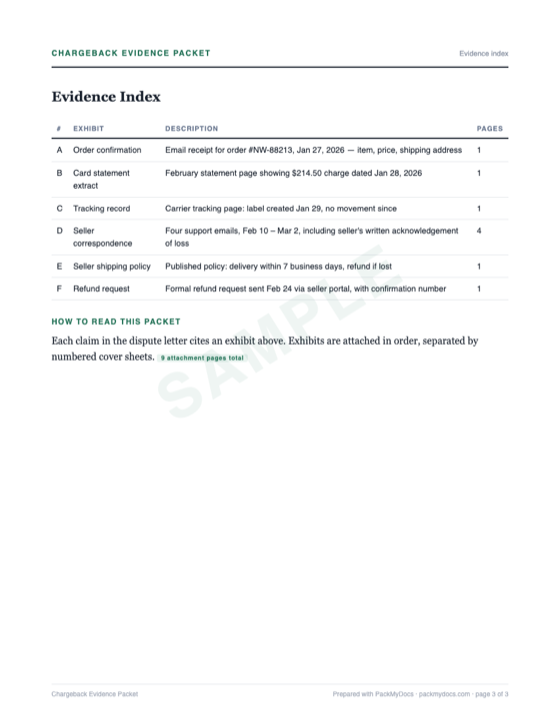
Jordan's packet — a $214.50 jacket that never arrived, turned into a reviewed sample dispute packet.
A dispute letter addressed to your card issuer, stating the charge, the reason, and what you're asking for
A dated timeline of events, from order to your last contact with the seller
A numbered evidence index, so every claim in the letter points to an exhibit
One combined PDF packet, ready to upload to your issuer's dispute portal or mail in
Download the complete sample PDF and see, page by page, how the finished packet is structured.
How it works
Photos, PDFs, screenshots, forwarded emails — in any order, straight from your phone. Messy is fine; that's the job.
Everything gets sorted, named, and assembled — the letter drafted, the timeline dated, every document numbered and indexed.
One clean PDF for wherever it needs to go — a dispute portal, an email, a printer. You review it before using it.
Is this you?
Evidence checklist
Here's the evidence worth gathering for an item-not-received credit card dispute. Don't worry about tidiness — screenshots, photos of paper, and forwarded emails all work. You bring the pile; the sorting is our job.
Tick off what you already have — progress stays on this device.
After you hit send
For many billing errors, written notice must reach the issuer within the required window. Online or phone disputes may be available too, but a written packet creates a clear record.
Contacting the seller can help, and those messages become useful evidence. Just don't let follow-up replace the notice your issuer needs within its deadline.
This is where an organized packet matters: one document, one timeline, numbered exhibits. Make the dispute easy to follow.
Issuers generally must acknowledge within 30 days and resolve within two billing cycles, no later than 90 days. Keep your packet in case more information is needed.
Get started
Upload your documents and get back an organized packet you can review, download, and use where it needs to go.
Previewing the checklist and sample packet is free. If you decide to build your own finished dispute packet, it costs $15.
Whatever you've got — the order confirmation email, a screenshot of the charge, photos of what arrived, the chat where support stopped replying. PDFs, photos, screenshots, forwarded emails: all fine, in any order. Messy is expected.
PackMyDocs is designed for fast assembly, not automatic submission. It organizes your files into a packet, then you read it over, tweak anything you like, and use it as a download, printout, or upload to your issuer's dispute portal.
No. The card issuer decides based on the evidence and the card network's rules. A complete, well-organized evidence packet improves how clearly your case is understood — it doesn't guarantee an outcome.
Contacting the seller can help, and those messages can become useful evidence. But don't let that delay your dispute. For many billing errors, the written notice has to reach your card issuer within the required window.
For US credit-card billing-error notices, the key window is often 60 days after the first statement with the disputed charge was sent or made available. Issuer and card-network processes can vary, so the packet keeps dates, charges, and evidence easy to check.
That's the main case this page is built around. Include the order confirmation, expected delivery details, tracking or delivery screenshots, seller messages, and the card statement charge.
Add whatever shows the delivery gap: tracking records, carrier updates, delivery photos if available, seller replies, and your own timeline. PackMyDocs keeps those exhibits numbered so the issuer can follow the story.
Include the emails, chats, support tickets, and dates. A no-reply trail can help show that you tried to resolve the problem, while your issuer still controls the dispute process.
This page is written for US credit-card disputes. Debit-card processes and legal protections can differ. You can still use the checklist to organize documents, but follow your issuer's debit-card dispute process.
Many issuers accept disputes online or by phone. Official guidance also emphasizes written notice within the required window. The packet works as a download, portal upload, email attachment, or printout.
No. PackMyDocs helps you organize your own documents into a clear packet. It doesn't advise you on your rights or act on your behalf. For legal questions, consult a qualified professional.